SEE OTHER PRODUCTS
PLASTER PREPARATION PLANT
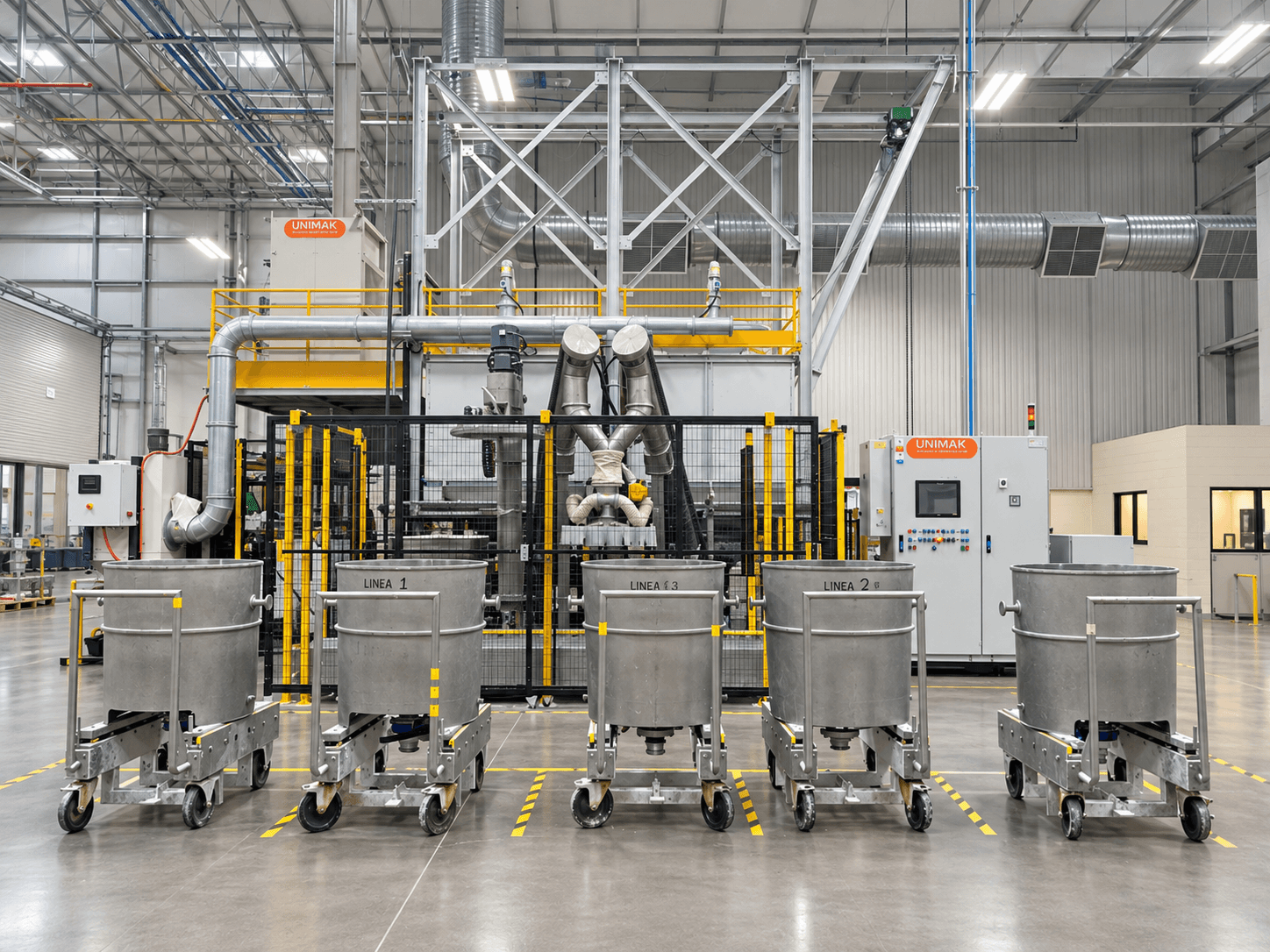
The Plaster Preparation Plant automates plaster handling from silo loading to final mixing. Big bag and paper bag loading, vibration-assisted silo discharge, inverter-controlled plaster feeding and adjustable-speed vacuum mixing create a controlled, repeatable preparation process with reduced operator dependency.
OUR APPROACH
At a Glance
A fully automated plaster preparation solution combining flexible bag loading, controlled powder flow, precise feeding and adjustable-speed vacuum mixing for consistent sanitary ware mould production.
WHY?
WHY?
WHY?
WHY?
WHY?
//TECHNICAL DATA
Minutes Per Batch
Tons Plaster Slurry per Month

Multi-Format Plaster Loading System
The 3 - 5 m³ plaster silos are designed for both bulk and manual bag loading. Big bags are handled through an overhead hoist/gantry system, while paper bags can be introduced through a dedicated loading inlet; a vacuum-assisted paper-bag handling solution is also documented for easier handling.

Vibrating Cone & Fluidized Silo Discharge
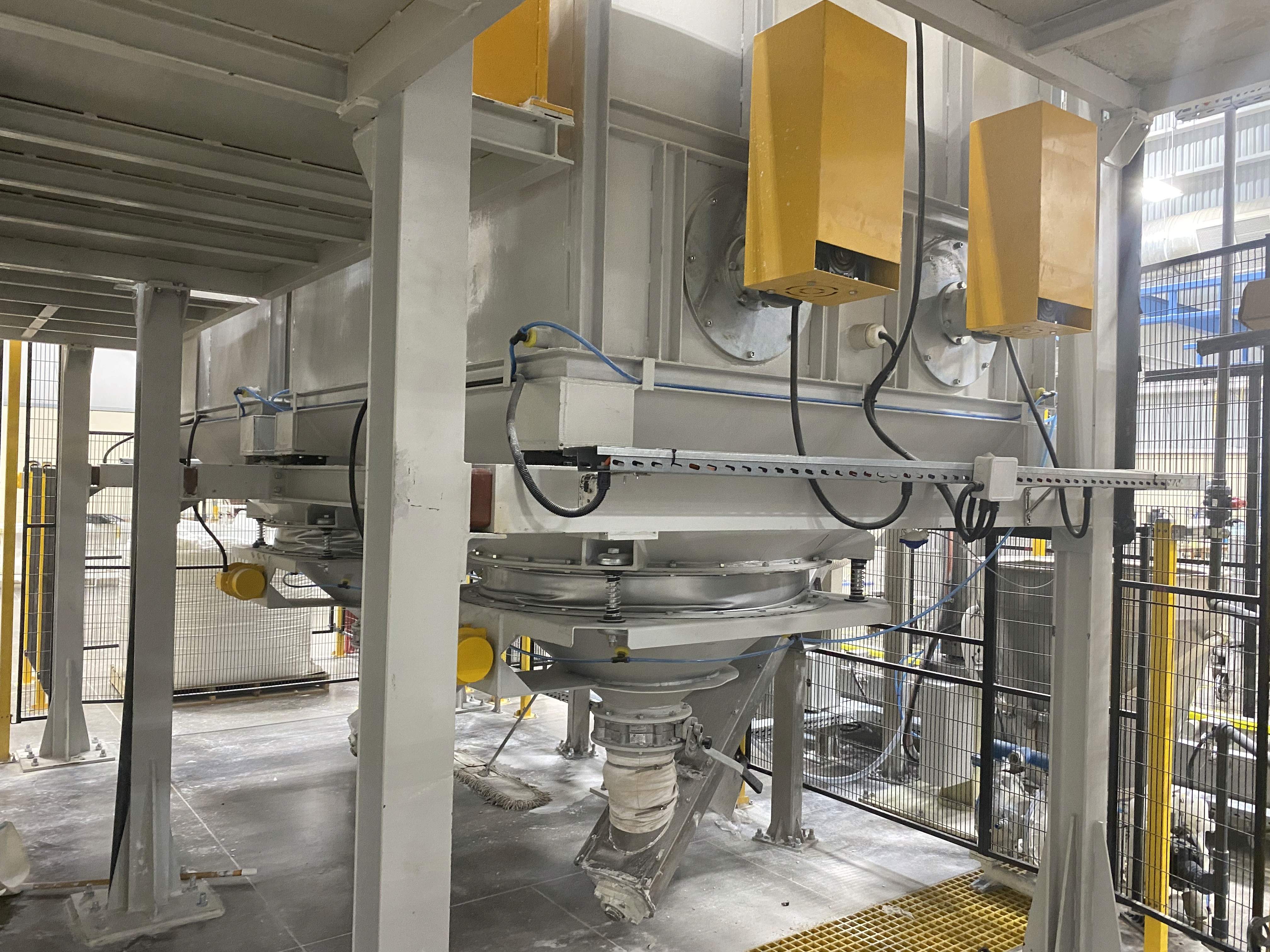
An inverted vibrating discharge cone, supported by compressed-air fluidizers positioned inside the silo, improves plaster flow toward the screw conveyor. The system is designed to reduce material adhesion to silo walls and support smooth discharge of fine plaster powder.
Inverter-Controlled Precision Screw Feeding
Each silo is equipped with a separate stainless-steel screw conveyor, specified at 1.5 kW and 82 rpm. PLC-integrated drive control allows the plaster feeding rate to be adjusted for more precise transfer into the weighing and preparation process.

Independent Digital Load-Cell Dosing
Water and plaster are weighed on separate 1,000 kg electronic load-cell systems. The specified maximum batch variation is ±100 g for water and ±250 g for plaster, with digital communication to the control system.

Variable-Speed Vacuum Mixing
The mixer uses a 5.5 kW frequency-controlled drive, allowing mixing speed to be adjusted according to the selected recipe. A dual-propeller arrangement supports homogeneous mixing, while the vacuum system provides de-airing capability up to -0.90 bar.

Siemens PLC Recipe & Process Automation
A Siemens S7-1214 PLC and industrial PC control water weight, plaster weight, sour time, mixing time, mixing speed, vacuum time and propeller cleaning. Recipes can be stored and recalled, while process and consumption data can be recorded for production monitoring.
