SEE OTHER PRODUCTS
ROBOTIC GLAZING CELL
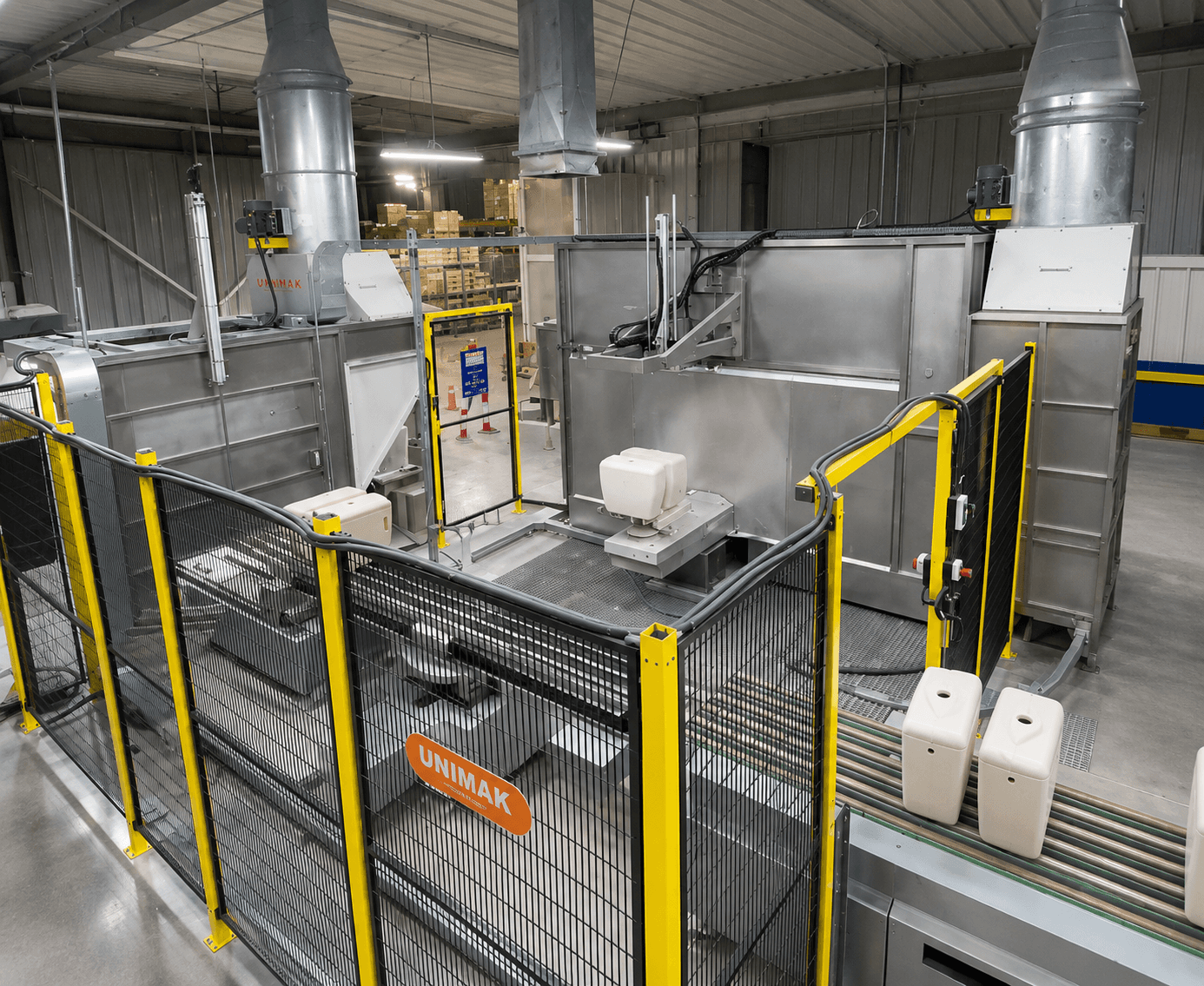
The Robotic Glazing Cell automates spray glazing for sanitary ware through coordinated robot motion, controlled glaze dosing, servo-positioned workpieces and integrated handling. Advanced offline programming supports new product development away from the running line, while configurable transfer and filtration solutions help manufacturers achieve repeatable glazing and adapt the cell to their existing production flow.
OUR APPROACH
At a Glance
A configurable sanitary ware robotic glazing cell combining offline programming, controlled glaze application and automated handling for repeatable multi-model production.
Why?
Why?
Why?
Why?
Why?
//TECHNICAL DATA
Average Capacity (pcs/shift)
Glaze Recovery Rate (%)

Synchronized Robotic Spraying with External Axes
The glazing robot can operate with coordinated 7th and 8th external axes, combining robot trajectories with servo-controlled product positioning for controlled access to complex sanitary ware geometries.

Advanced Offline Programming & Spray Simulation
CAD-based offline programming creates and validates robot trajectories outside production. The virtual cell can simulate the robot, turntable and spray gun while visualizing parameters such as glaze distribution and layer thickness before the program reaches the physical cell.

Mass-Flow Glaze Dosing & Spray Control
An in-line mass-flow measurement system works with motor-controlled glaze pumping and proportional control of flow, atomization and spray fan parameters. The circuit can switch between glaze and water for faster line cleaning during glaze or colour changes.

Servo-Controlled Two-Position Turntable
The stainless-steel dual turntable uses servo motion, reduction gearing and position feedback to control workpiece rotation. Its two positions operate with a 180° angular pitch for repeatable presentation of the sanitary ware to the glazing robot.

Configurable Automatic Handling Architecture
Depending on the production concept, the cell can integrate pick-and-place transfer devices or dedicated handling robots together with loading, exit and buffer conveyors for coordinated movement between inspection, glazing and downstream operations.

Enclosed Stainless-Steel Glazing & Filtration Environment
The fully enclosed stainless-steel glazing booth is engineered for stable airflow, reduced turbulence and collection of excess glaze. The cell can also integrate dry filtration with automatic cleaning for controlled overspray separation and recovery.
