SHUTTLE KILN
The Shuttle Kiln is a modular batch firing system for sanitary ware, engineered for controlled first firing and re-firing. Pulse-fired combustion, burner-level temperature feedback and programmed pressure and cooling profiles provide precise process control, while configurable kiln-car automation and comprehensive firing-data management adapt the system to different products, plant layouts and production strategies.
OUR APPROACH
At a Glance
A modular sanitary ware shuttle kiln combining precise pulse-fired thermal control, programmable firing profiles and configurable automated kiln-car handling.
Why?
Why?
More Productive Time Between Firings
Why?
Why?
//TECHNICAL DATA
Per Year
Per Year

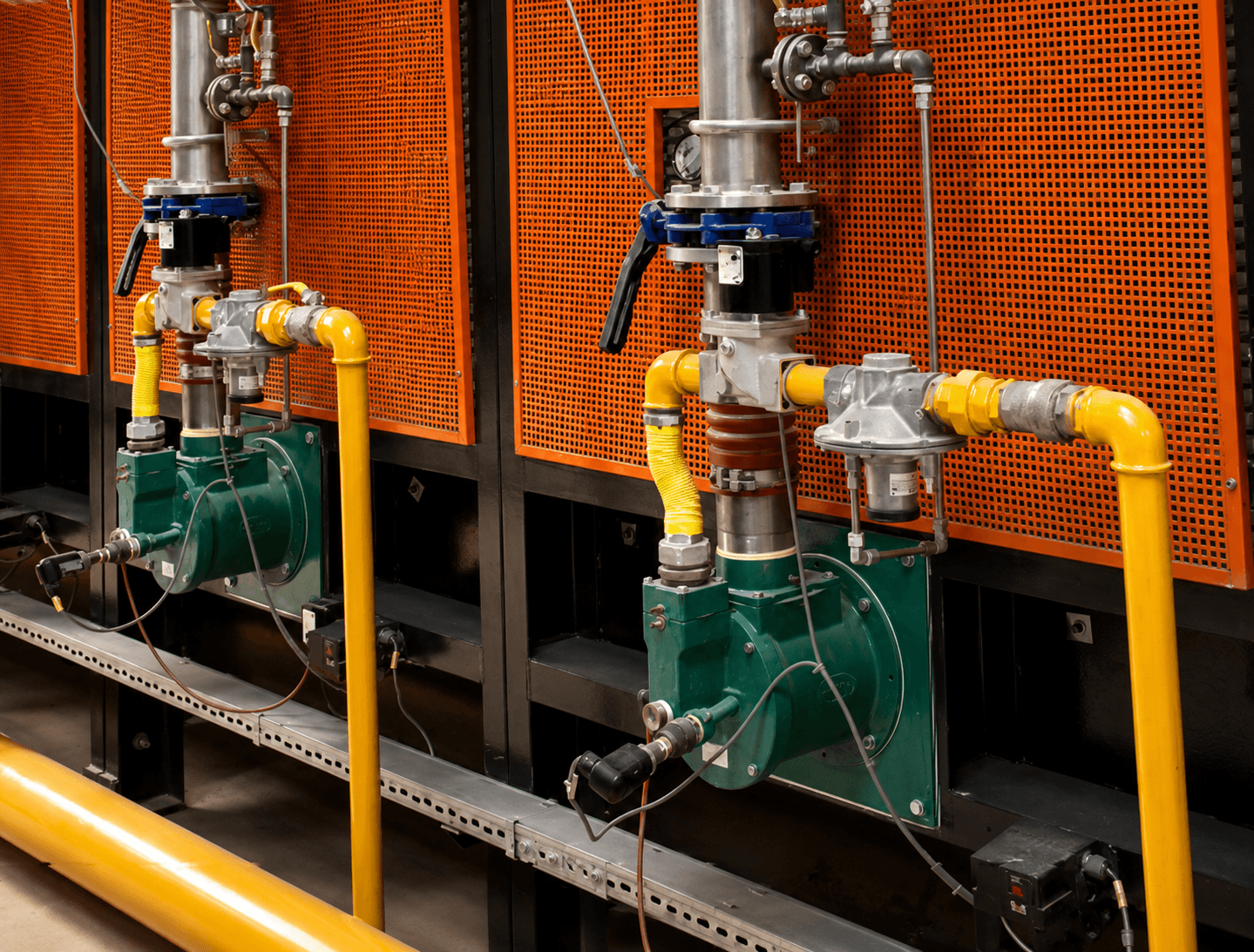
Multi-Mode Pulse Firing Control
The combustion architecture combines pulse firing with dedicated control modes, including fixed-air operation at lower temperatures and ratio control during the firing cycle, supporting controlled heat distribution and combustion stability.
Burner-Level Temperature Feedback
Individual burner positions are monitored by dedicated thermocouples. The control system continuously compares measured zone temperatures with the programmed firing curve and adjusts burner firing frequency accordingly.

Programmed Kiln Pressure & Exhaust Management
Internal kiln pressure is measured through pressure feedback and regulated according to the programmed process curve. Motorized exhaust dampers respond to kiln pressure, integrating atmosphere and waste-gas management into the firing control architecture.

Low-Thermal-Mass Insulation Architecture
High-density ceramic-fibre insulation is applied across the kiln walls, roof and doors, while kiln cars use lightweight thermal insulation and engineered sealing arrangements to limit unwanted heat and gas movement.

Configurable Automated Kiln-Car Handling
Kiln cars can be integrated with motorized transfer systems, rail-based movement, position sensing and automatic loading/unloading. Depending on the plant layout, semi-automatic or fully automatic handling and elevator systems can be incorporated into the storage and transfer circuit.

PLC, HMI & SCADA Firing Management
The automation platform manages temperature gradients, cycle times, kiln pressure, combustion functions and alarms. Supervisory software provides firing-curve selection, live trends, historical process data and alarm records for production analysis without tying the web specification to a particular control-component brand.
